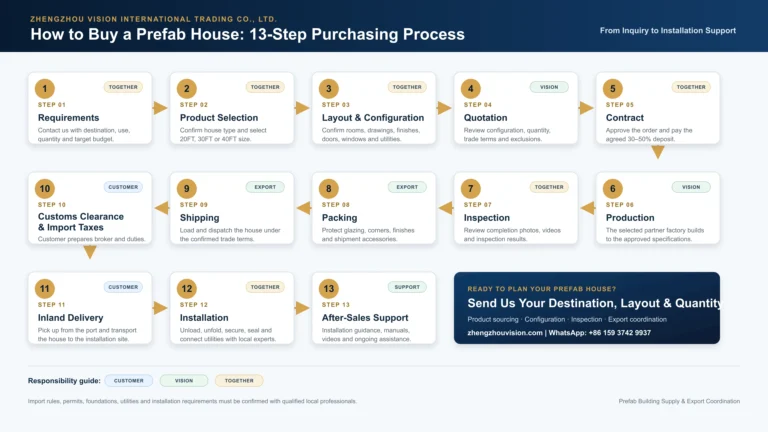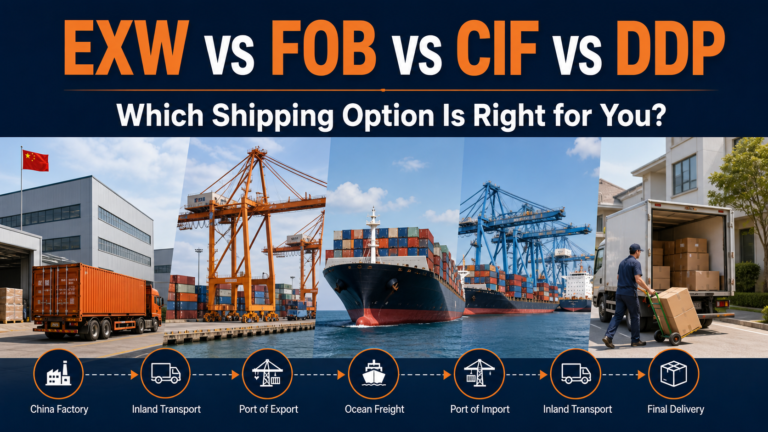
Buying a prefab house from China becomes much easier when every decision is confirmed in the correct order. This 2026 guide takes you from choosing a house type and bedroom layout to quotation, production, inspection, shipping, customs clearance, installation and move-in.
Zhengzhou Vision is an international trading company providing prefab-house sourcing, customization coordination and export solutions. We help buyers compare suitable products, communicate specifications with selected production partners, follow order progress and prepare agreed export documents.
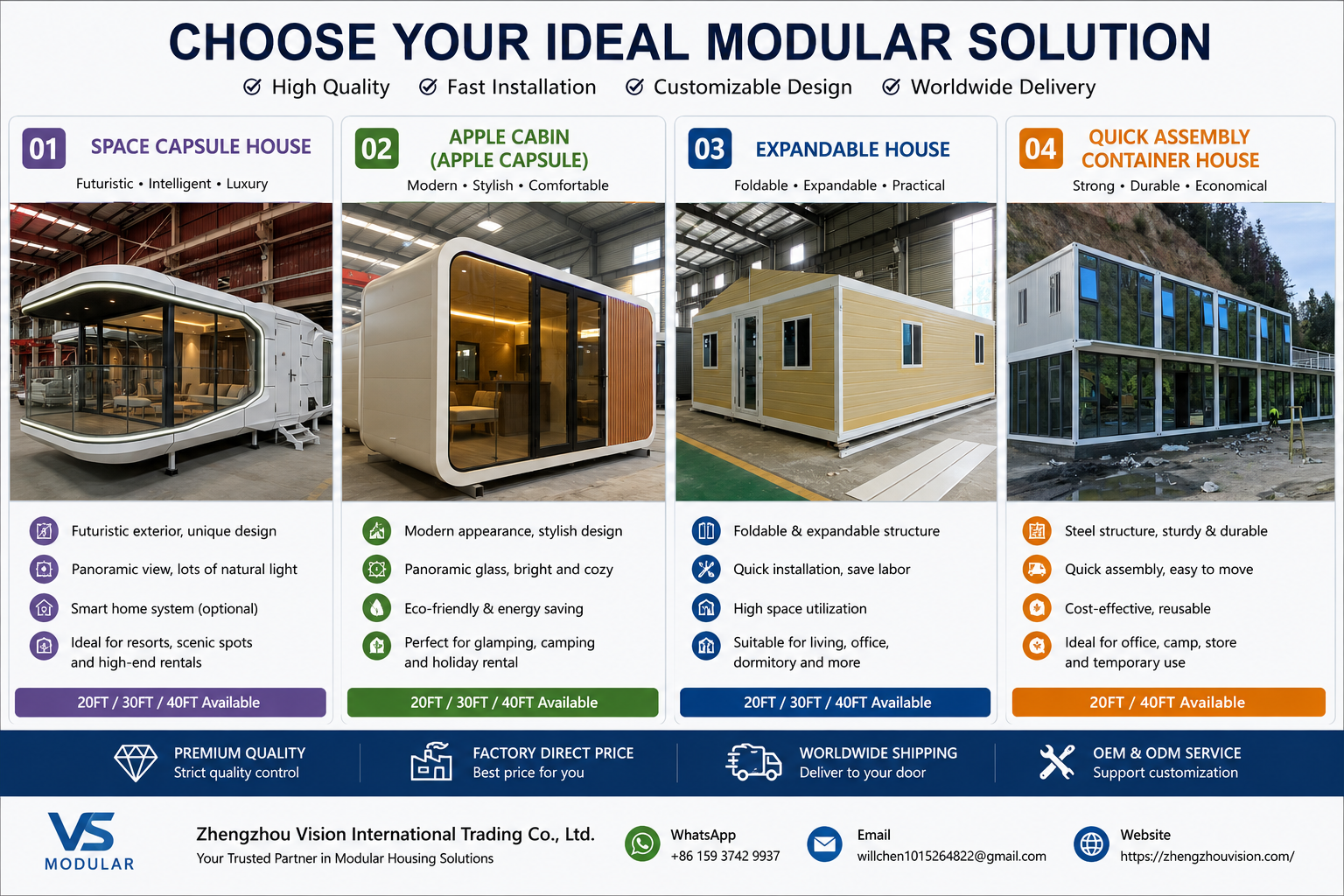
Compare four popular modular housing options before requesting a quotation.
Prefab House Buying Process at a Glance
- Choose the right house type.
- Confirm occupants, bedrooms and layout.
- Review a detailed quotation.
- Provide the delivery address and nearest port.
- Confirm customs-clearance and port-pickup ability.
- Confirm international freight and destination costs.
- Sign the purchase contract.
- Pay the agreed deposit.
- Approve details and begin production.
- Review completion photos, videos or inspection results.
- Receive the agreed customs-clearance documents.
- Clear and collect the cargo, then install it.
- Complete final connections and move in.
Step 1: Choose the Right Type of Prefab House
Start with how the building will be used—not only how it looks. A family home, backyard room, worker accommodation, site office, shop, glamping cabin and resort guest room have different priorities.
| House type | Common advantages | Typical applications |
|---|---|---|
| Expandable House | Efficient transport, fast expansion and practical residential layouts | Family homes, staff housing, offices and rental units |
| Apple Cabin | Modern appearance, panoramic glazing and design-focused interior | Resorts, glamping, holiday rentals and commercial spaces |
| Space Capsule House | Distinctive futuristic appearance and premium guest experience | Scenic areas, hotels, resorts and high-end short stays |
| Quick Assembly Container House | Flexible configuration, durable steel structure and convenient assembly | Offices, camps, shops, dormitories and temporary projects |
Also confirm whether a 20FT, 30FT or 40FT model suits your site and room plan. Always use the approved drawing and exact dimensions rather than relying only on a model name.
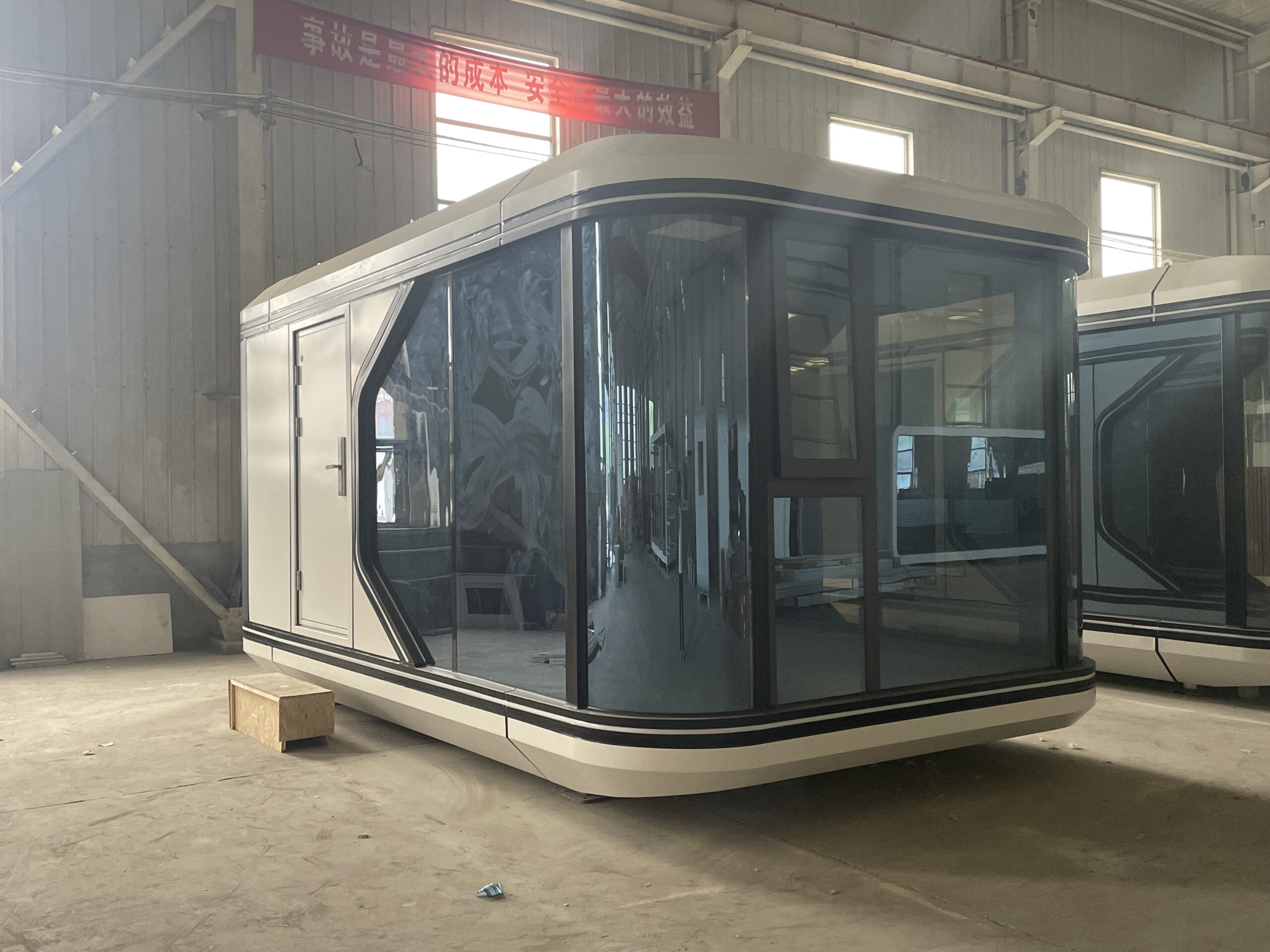
Space Capsule House with panoramic glazing during pre-shipment preparation.
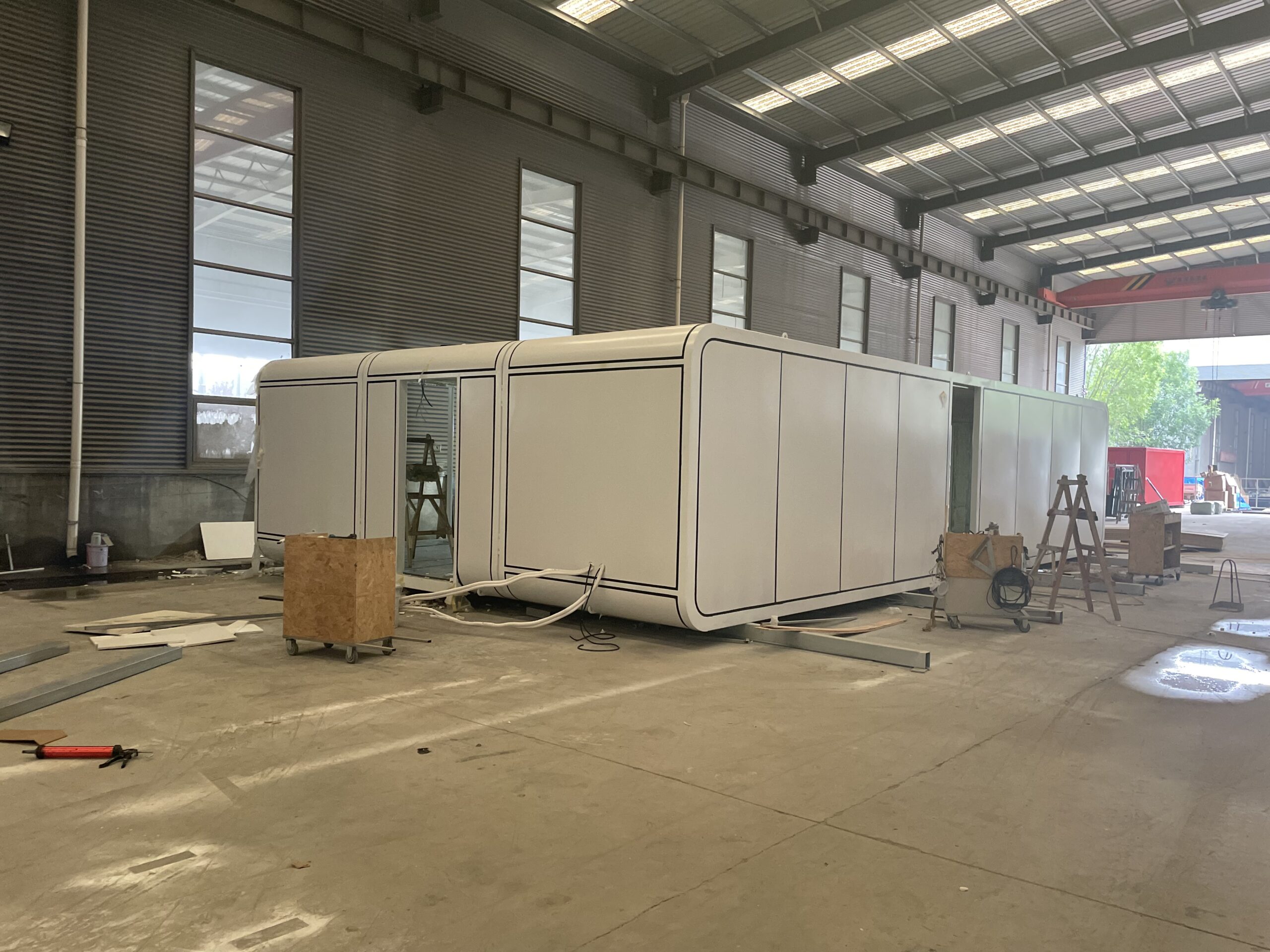
Apple Cabin modular unit during production and finishing.
Step 2: Confirm Occupants, Bedrooms and Layout
Tell the supplier how many people will live or work in the building. Then confirm the required bedrooms, bathrooms, kitchen, living area, storage and any accessibility needs. A couple, a family with children and a four-person worker-accommodation project may all need very different layouts.
Useful layout information to provide
- Number of permanent and occasional occupants
- Required bedrooms and preferred bed sizes
- Number of bathrooms
- Kitchen or kitchenette requirements
- Living, dining, office or storage areas
- Door and window positions
- Electrical voltage, socket type and plumbing points
Step 3: Get a Detailed Written Quotation
An accurate quotation should be based on a defined model, size, drawing and configuration. Compare what is included—not just the total price.
Check the dimensions, quantity, materials, insulation, windows, doors, interior finishes, bathroom and kitchen equipment, electrical system, optional furniture, packing, trade term, loading port, production basis, payment terms and exclusions. Ask for unclear items to be written into the quotation.
Step 4: Provide the Delivery Address and Nearest Port
Provide the destination country, city, postal code and full project address when available. The nearest port is not always the most suitable port, so your freight forwarder should also consider sailing routes, terminal facilities, inland distance and handling ability.
Step 5: Confirm Customs Clearance and Port Pickup Ability
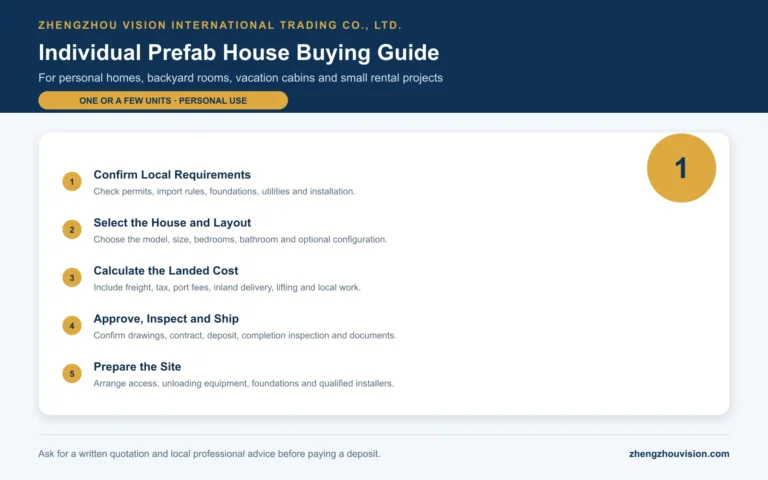
Before ordering, confirm that you—or an appointed local company—can import the building, clear customs and collect the cargo from the destination port. If you do not already have this ability, contact a licensed customs broker and freight forwarder before paying the deposit.
Ask local professionals about import restrictions, HS classification, duties, VAT/GST or sales tax, port charges, product certification, planning permission, building codes, wind and snow loads, fire rules and electrical standards.
Step 6: Confirm International Freight and Total Landed Cost
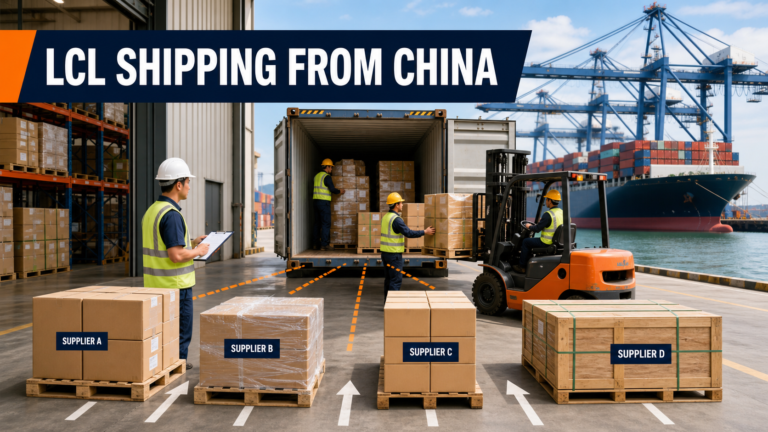
International freight changes with the shipping route, season, cargo dimensions and equipment availability. Confirm the shipping method, loading port, destination port, estimated transit time and quote validity.
Budget beyond the house price
- China-side transport and loading, if applicable
- Ocean freight and cargo insurance
- Destination terminal and documentation charges
- Customs broker fees, import duty and taxes
- Port storage if clearance is delayed
- Inland delivery, crane or forklift service
- Foundation, utilities, local labor and permits
Step 7: Sign the Purchase Contract
Once the drawings, configuration, price, delivery terms and payment terms are confirmed, both parties sign the purchase contract or other agreed order documents. The contract should match the final quotation and record important technical attachments, inspection arrangements, delivery basis and responsibilities.
Step 8: Pay the Agreed Deposit
The buyer pays the deposit stated in the signed contract or pro forma invoice. Check the beneficiary name and account details carefully through an established communication channel. Production should begin only after the required approvals and payment confirmation.
Step 9: Confirm Details and Begin Production
Before production, approve the final drawing, colors, finishes, electrical system, plumbing points and optional equipment. Changes after production starts may affect cost and delivery time.
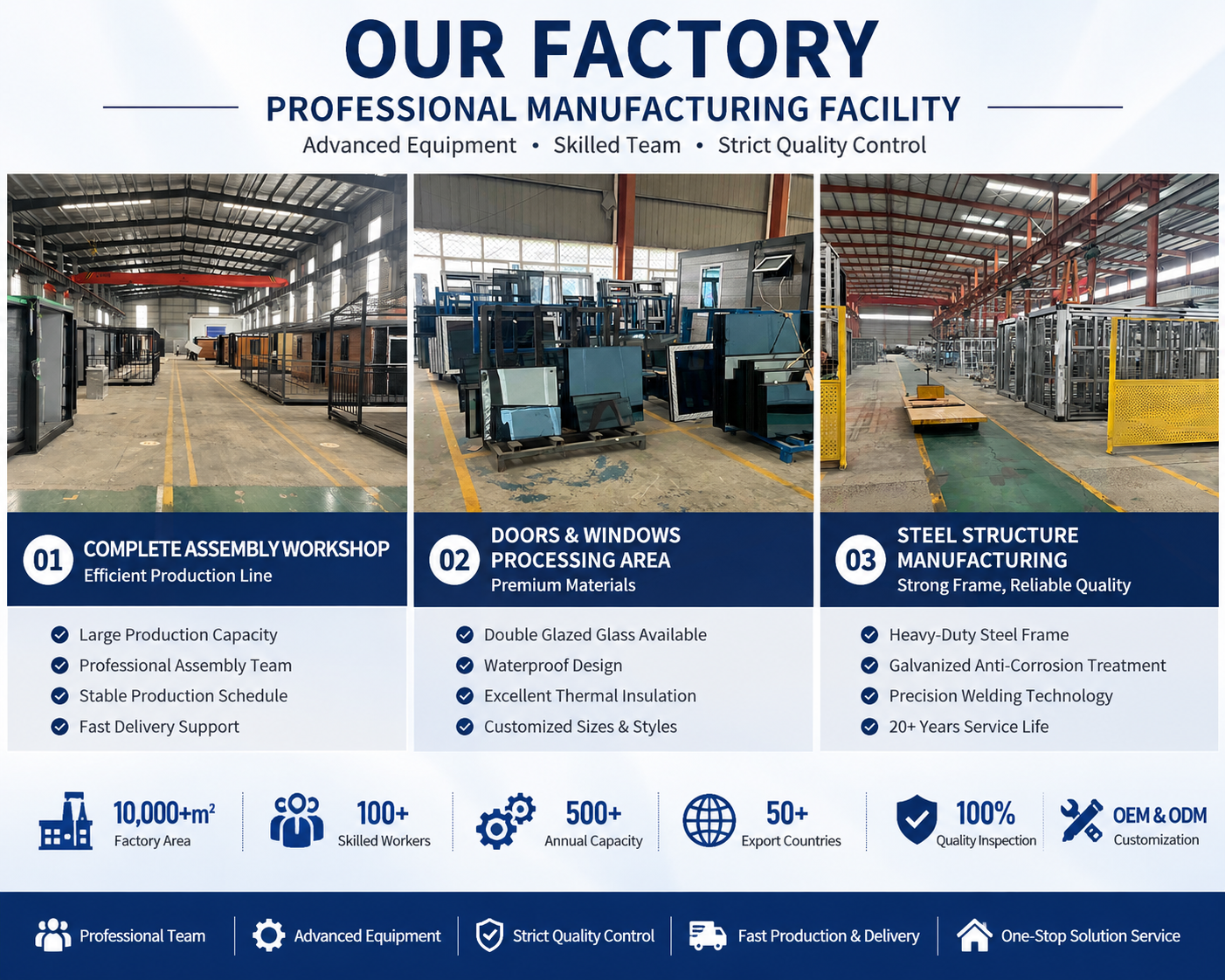
Production coordination covers assembly, doors and windows, steel structure work and quality checks.
During production, the trading and export team coordinates specification communication and follows agreed milestones with the selected production partner. Buyers should keep all approved drawings and configuration lists together for later inspection.
Step 10: Review Photos, Videos and Inspection Results Before Shipment
Before loading, compare the completed unit with the approved order. Review the overall appearance, doors, windows, finishes, lights, sockets, bathroom and kitchen equipment, accessories and quantities. Completion photos and videos help remote buyers verify visible details.
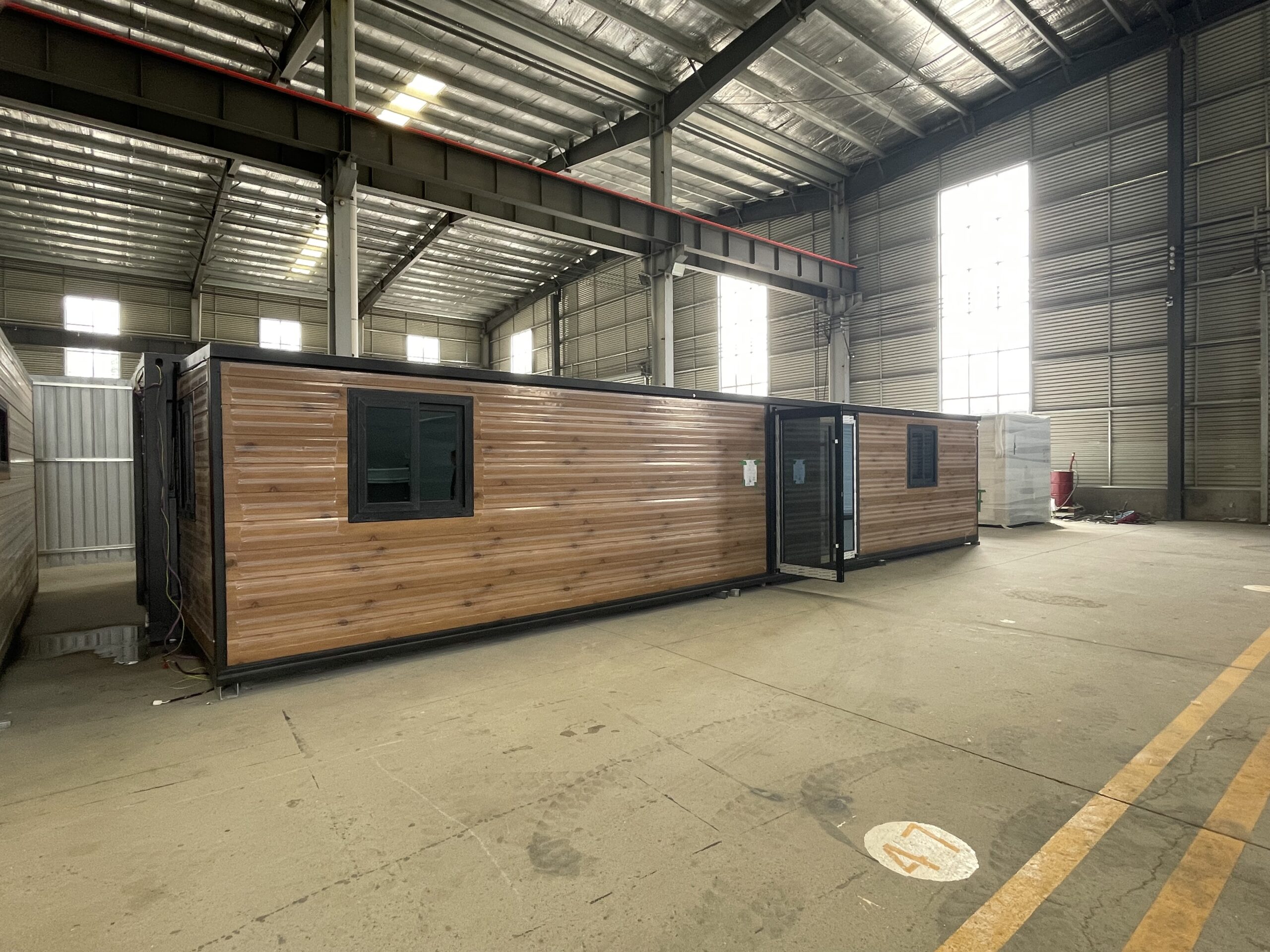
Expandable house being prepared for inspection and delivery.
For larger or higher-risk projects, discuss an independent third-party inspection before signing the contract. Confirm how any identified issue will be recorded and corrected before shipment.
Step 11: Receive Customs-Clearance Documents
The available shipping and export documents are prepared according to the contract, cargo and shipping method. Common documents include the commercial invoice, packing list and bill of lading. Other documents depend on the destination and agreed requirements.
Send draft or available documents to your customs broker early. Only the local broker and authorities can confirm exactly what is required for import clearance.
Step 12: Clear Customs, Collect the Cargo and Install the House
After arrival, the importer completes customs clearance, pays applicable charges and arranges port pickup. Before the truck reaches the site, confirm road access, gate width, turning space, overhead clearance, ground condition and unloading position.
The foundation should be ready before delivery. Depending on the model, installation may include lifting, positioning, unfolding, joining modules, anchoring, sealing and connecting electricity, water and drainage. Installation drawings, videos and remote guidance can be coordinated, while local foundations, lifting and utility work should be completed by qualified contractors.
Step 13: Final Checks and Move In
After installation, inspect seals, doors, windows, drainage, electrical connections, plumbing, ventilation and installed equipment. Keep the contract, drawings, packing list, inspection records and installation documents. Once local approvals and final checks are complete, the house is ready for furnishing, operation or move-in.
Buyer Checklist Before Paying a Deposit
- The house type, size and layout match the intended use.
- The number of occupants, bedrooms and bathrooms is confirmed.
- The written quotation identifies inclusions and exclusions.
- The destination address and suitable port are confirmed.
- A local customs broker has reviewed import requirements.
- Shipping and estimated destination costs are understood.
- The contract matches the final drawing and configuration.
- The site, foundation, unloading and installation plan are realistic.
Frequently Asked Questions
What information should I send to get an accurate prefab house quotation?
Send your destination country and city, nearest suitable port, intended use, quantity, preferred house type and size, number of occupants, bedrooms and bathrooms, required configuration and target delivery time. Photos or a simple layout sketch also help.
Which prefab house type is best for residential use?
Expandable houses are often selected for practical family layouts and efficient transport. Apple Cabins and Space Capsule Houses are popular for resorts and distinctive rental accommodation. Quick Assembly Container Houses suit projects that value flexible layouts and straightforward on-site assembly. The best choice depends on local rules, climate, site access, budget and intended use.
Is international shipping included in the house price?
It is not automatically included. A quotation should clearly state the trade term and whether ocean freight, insurance, destination charges, customs duty, inland delivery, unloading, foundations and installation are included or excluded.
Can I inspect the prefab house before shipment?
Yes. Buyers can review completion photos and videos before shipment. A representative or independent third-party inspection can also be discussed before production and written into the order arrangements.
Who is responsible for customs clearance and port pickup?
The buyer or importer normally appoints a local customs broker, completes import clearance, pays local taxes and destination charges, and arranges pickup from the port unless the signed contract states otherwise. Confirm this ability before ordering.
What customs documents can be provided?
Available export documents commonly include the commercial invoice, packing list and bill of lading, together with other agreed product or shipping documents. Your local customs broker should confirm the exact documents required for your destination.
Do you provide installation guidance?
Installation drawings, manuals, videos and remote guidance can be coordinated for the selected model. Foundations, lifting, utility connections and local code compliance should be handled by qualified local contractors.
How long does the complete buying process take?
The total timeline depends on design confirmation, production schedule, order quantity, inspection, vessel availability, ocean transit, customs clearance and inland delivery. Ask for a project-specific schedule with your quotation.
Request a Prefab House Quotation
Send your destination country and city, nearest port, intended use, quantity, preferred house type and size, number of bedrooms and bathrooms, and any optional configuration. Our team will help compare suitable sourcing and customization options and coordinate an export solution.
Contact Zhengzhou Vision Browse Prefab House Products Read More Buying Guides
This article provides general purchasing information, not legal, customs, tax, engineering or building-code advice. Requirements vary by destination. Confirm current rules with local authorities and qualified professionals before ordering.