LCL shipping from China can be a smart choice for smaller orders, mixed products, or cargo collected from several suppliers. However, the lowest ocean freight quote is not always the lowest final cost. This guide explains how LCL consolidation works, why destination charges matter, how to compare LCL vs FCL shipping, and how to choose a practical solution based on total landed cost.
What Is LCL Shipping from China?
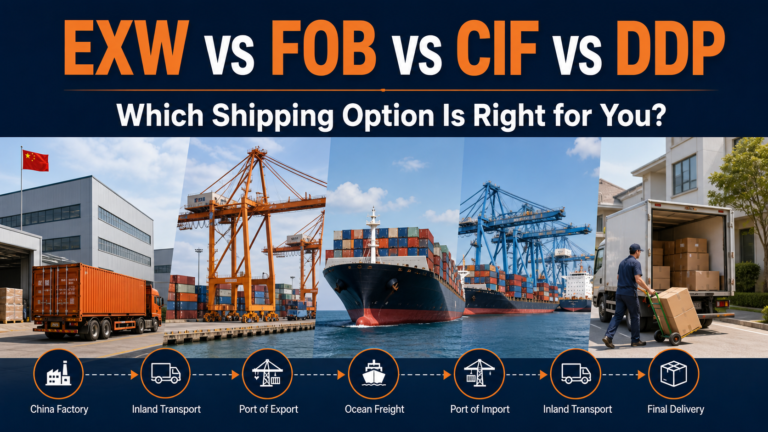
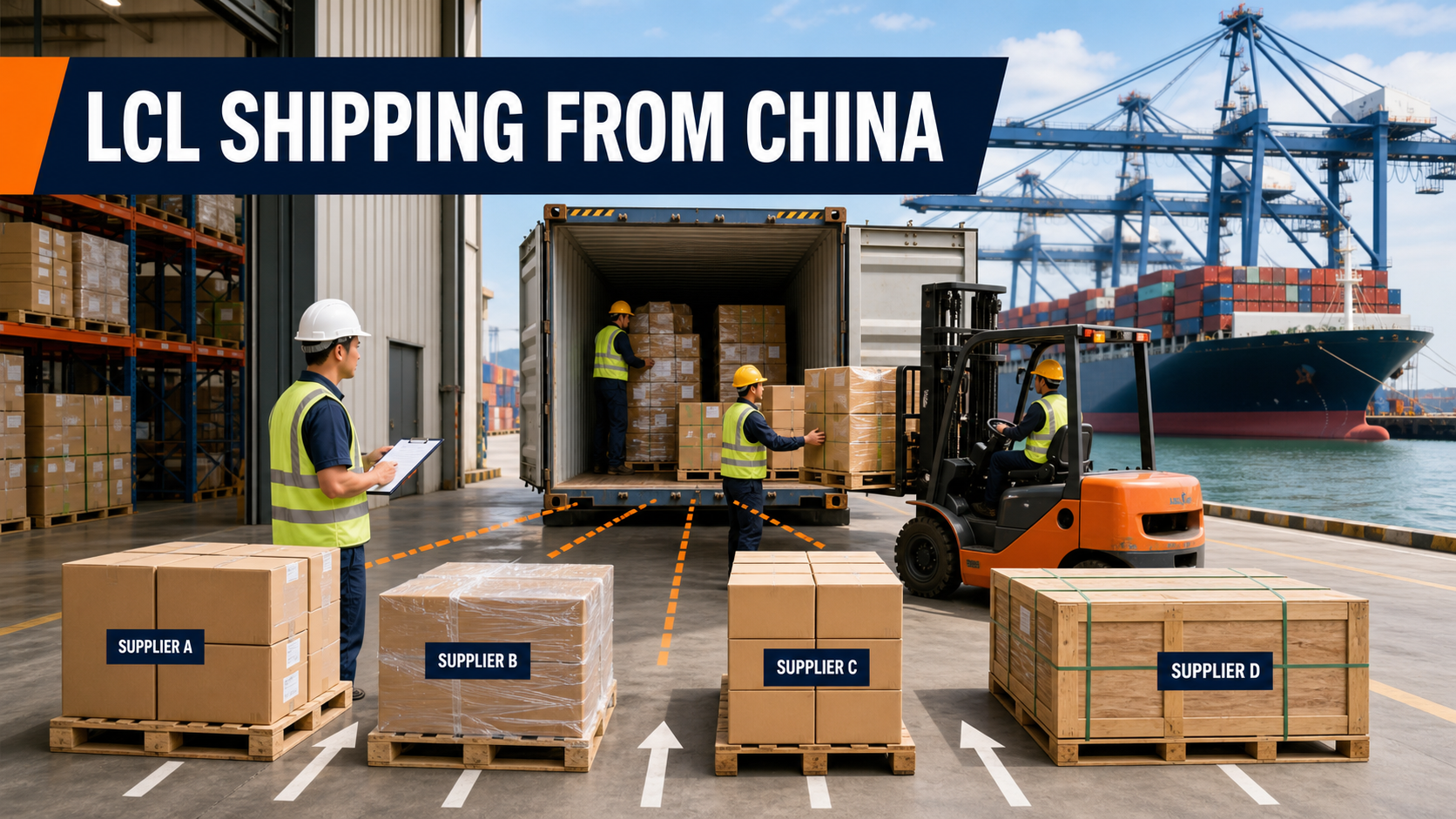
LCL means Less than Container Load. Instead of paying for an entire shipping container, your cartons, crates, or pallets share container space with cargo from other shippers. The goods are received at a consolidation warehouse or Container Freight Station (CFS), grouped according to route and destination, loaded into a container, shipped by sea, and separated again after arrival.
This makes China LCL shipping useful when your order is too small for a full container, when you want to ship more frequently, or when you need to combine goods purchased from multiple Chinese suppliers. Charges are commonly influenced by cargo volume in cubic meters (CBM), weight, route, cargo type, handling requirements, and the services included in the quotation.
Why Can the China-Side LCL Ocean Freight Look Very Low?
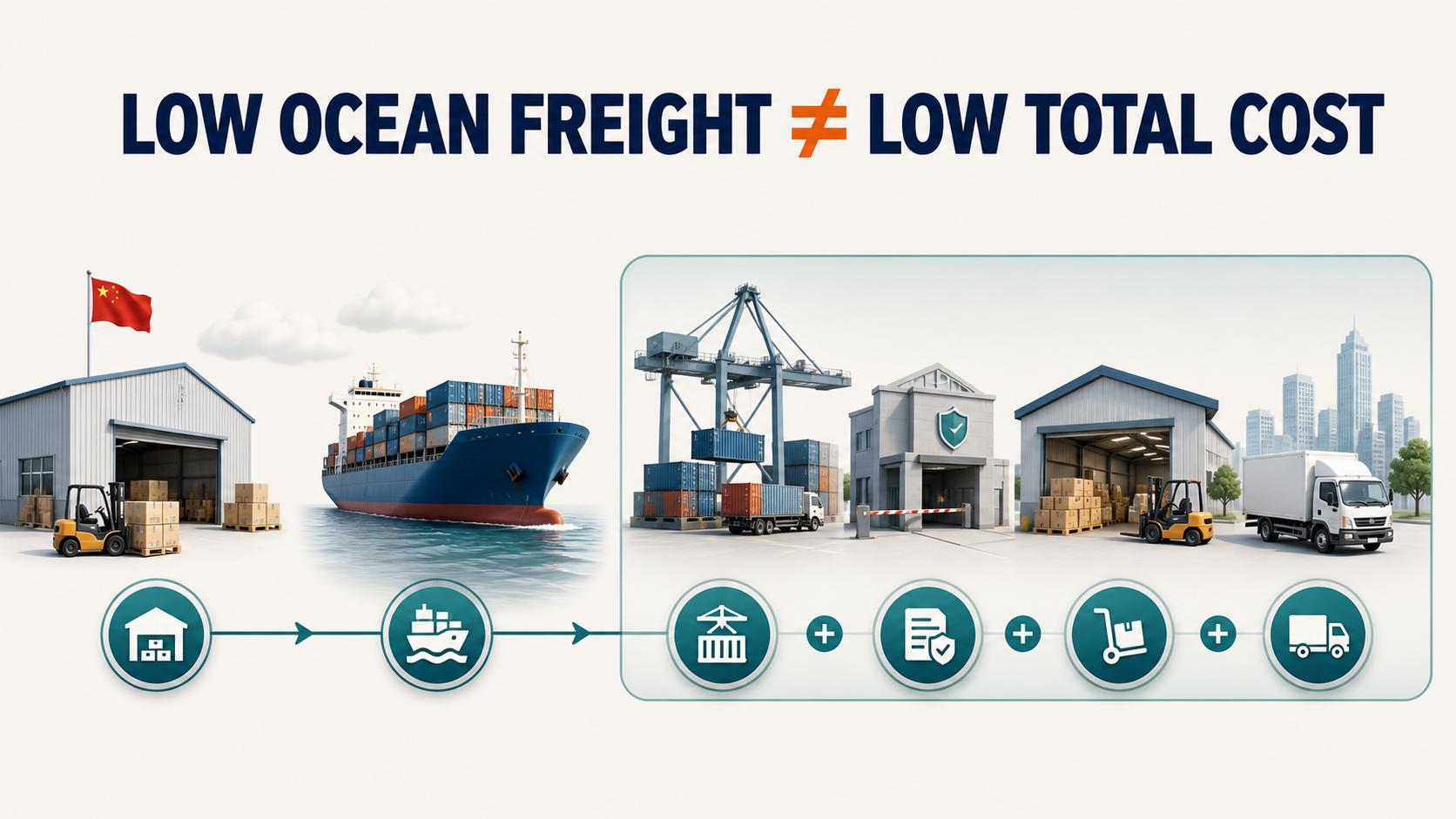
An attractive ocean freight line may cover only the sea transportation between ports. It may not include every origin charge, destination terminal charge, customs-related cost, warehouse fee, documentation fee, local delivery charge, duty, or tax. This is why buyers should never compare LCL quotations by the ocean freight number alone.
Promotional or market-driven base freight can sometimes appear unusually low. The remaining costs may be collected elsewhere in the shipment, especially at the destination. This does not automatically mean the quote is incorrect, but it does mean the buyer should ask for a clear breakdown and confirm which party is responsible for every stage.
Common LCL Destination Charges
Exact charges vary by country, port, agent, cargo type, Incoterm, and local regulations. A destination invoice may include some of the following:
- Destination CFS or deconsolidation fee
- Terminal handling and port-related charges
- Documentation or delivery order fee
- Customs clearance service fee
- Import duty, VAT, GST, or other taxes
- Security, scanning, inspection, or quarantine charges when applicable
- Storage fees if cargo is not collected within the free period
- Warehouse handling, pallet handling, or forklift charges
- Local delivery from the warehouse or port area to the final address
- Special handling for oversized, fragile, non-stackable, battery, or regulated cargo
Not every shipment will include every item. The important step is to request an all-in LCL shipping estimate showing origin costs, ocean freight, destination charges, customs-related services, and delivery scope. Duties and taxes should be estimated separately when they depend on the declared product value and HS code.
LCL vs FCL: Which Shipping Method Is Better?
FCL means Full Container Load. One shipper books the entire container, even if the container is not completely full. LCL and FCL should be compared using the complete shipment rather than a single volume rule.
| Decision factor | LCL shipping | FCL shipping |
|---|---|---|
| Container space | Shared with other shipments | Dedicated to one shipper |
| Typical use | Smaller or irregular cargo volumes | Larger cargo volumes or dedicated loads |
| Pricing basis | Often weight/measure and local charge items | Container rate plus applicable local charges |
| Handling | More consolidation and deconsolidation touchpoints | Usually fewer cargo handling touchpoints |
| Timing | May require extra time for consolidation and release | Often more direct after loading |
| Best decision basis | Total cost, cargo characteristics, route, urgency, risk, and delivery requirements | |
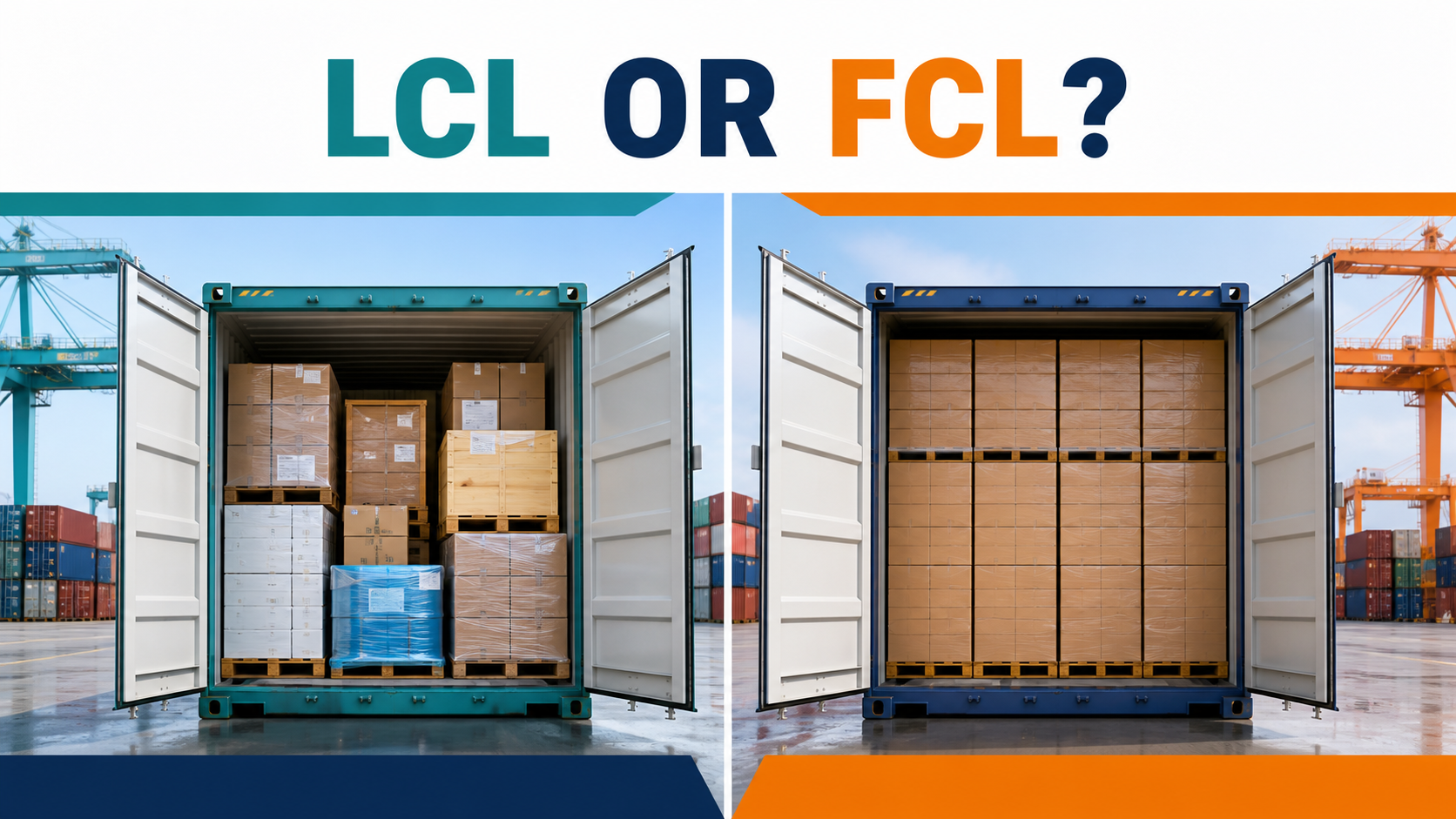
LCL may be suitable when:
- Your cargo does not justify paying for a whole container.
- You are testing a new product or ordering smaller quantities.
- You want to consolidate products from several suppliers in China.
- You prefer smaller, more frequent shipments to control inventory.
- The cargo is properly packed and can tolerate additional handling.
FCL may be more suitable when:
- Your shipment volume makes the full-container cost competitive.
- The goods are fragile, high-value, bulky, or difficult to handle.
- You want fewer handling points between loading and destination.
- Timing, control, or cargo separation is especially important.
- Destination LCL fees make the shared-container option less economical.
Compare Total Landed Cost, Not Just Ocean Freight
Total landed cost is the broader amount required to move the goods from the supplier to the buyer’s required destination. Depending on the agreed scope, it can include product cost, China domestic transport, export packing, consolidation, origin handling, international freight, cargo insurance, customs clearance, duty, tax, destination handling, storage risk, and final delivery.
A slightly higher freight quotation can be the better choice when it provides clearer destination costs, more reliable routing, better cargo handling, or a simpler delivery process. Conversely, LCL can be an efficient solution when the shipment is small and the complete local charge structure is understood in advance.
Information Needed for an Accurate LCL Shipping Quote
Prepare the following details before requesting a China LCL freight quote:
- Product name and intended use
- Number of cartons, crates, or pallets
- Packed dimensions and gross weight for every package
- Total CBM and total gross weight
- Pickup city or supplier locations in China
- Destination port, postal code, and delivery address
- Preferred Incoterm and required service scope
- Ready date and target delivery schedule
- HS code if available
- Whether the cargo contains batteries, liquids, magnets, chemicals, wood packaging, or other controlled items
- Whether the cargo is fragile, oversized, heavy, or non-stackable
Accurate packing information is essential. If dimensions or weight change after warehouse measurement, the final chargeable volume and freight cost may also change.
How Zhengzhou Vision Helps You Choose a Suitable Shipping Solution
Zhengzhou Vision is a trade-company sourcing, customization, and export solutions provider. We are not presenting ourselves as the ocean carrier or the manufacturer. Our role is to help international buyers organize the overall order and make a more informed shipping decision.
Based on your products, supplier locations, packing details, cargo volume, destination, timing, and budget, we can help you:
- Collect and organize cargo information from different suppliers
- Review packing dimensions and consolidation requirements
- Compare LCL, FCL, air freight, rail, or combined transport where relevant
- Ask for clearer origin and destination cost information
- Consider cargo handling, transit time, customs needs, and final delivery
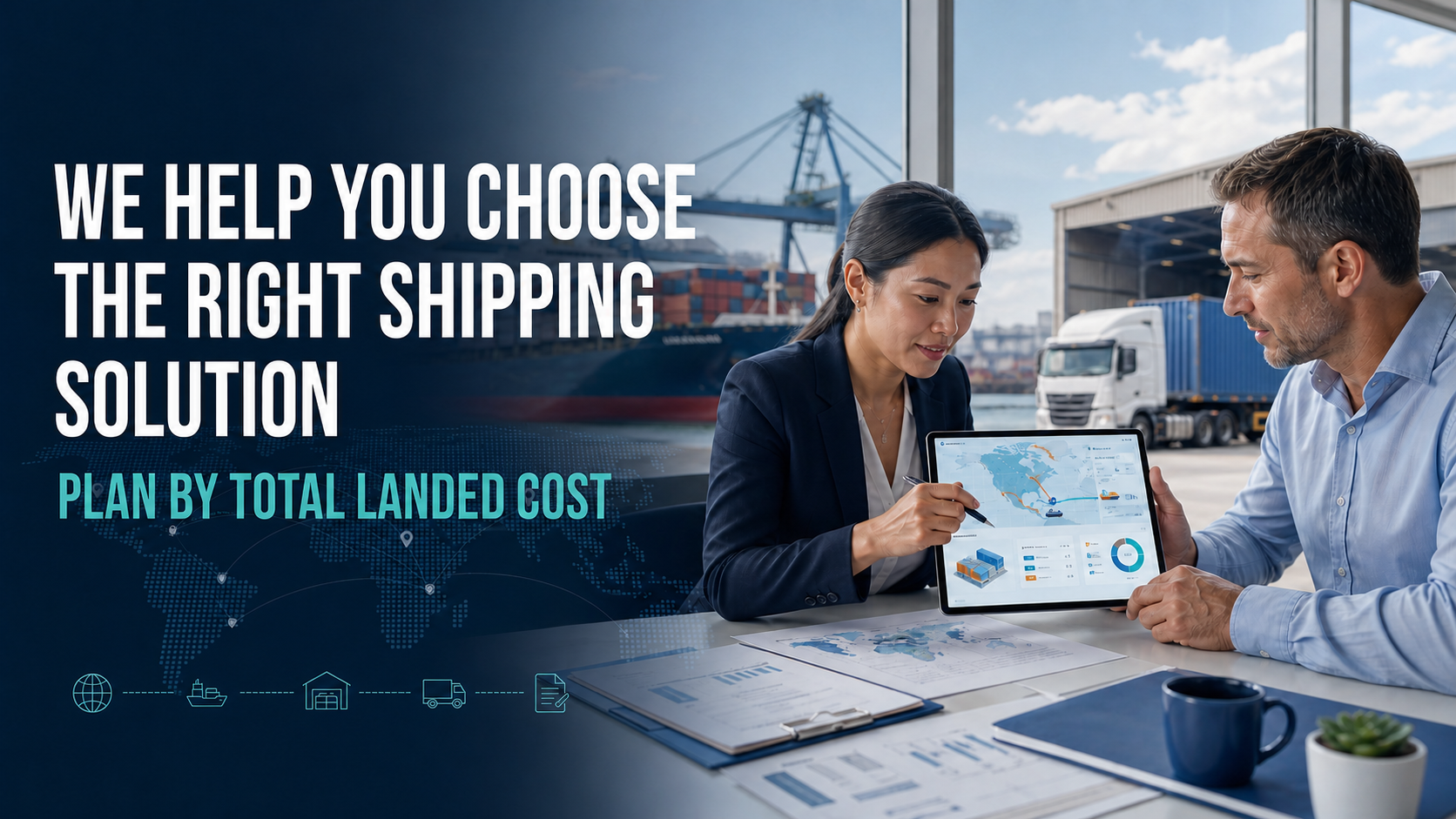
- Choose a practical transport plan based on total landed cost rather than a single low freight line
Frequently Asked Questions About LCL Shipping
Is LCL always cheaper than FCL?
No. LCL is often economical for smaller shipments, but the advantage can decrease as cargo volume and local handling charges increase. Compare complete LCL and FCL quotations for the same route and delivery scope.
Why are LCL destination charges sometimes high?
LCL cargo must be unloaded, separated, documented, handled through a warehouse, and released to each consignee. Destination costs vary by port, country, local agent, cargo type, and the services included in the original quote.
Can goods from multiple Chinese suppliers be consolidated?
Often yes, provided the products, timing, documents, packaging, and compliance requirements are suitable. Supplier coordination and warehouse planning should be confirmed before shipping.
Is LCL suitable for fragile or high-value cargo?
It may be possible, but LCL normally involves more handling than FCL. Strong export packaging, cargo insurance, correct labeling, and an assessment of handling risk are important. For some cargo, FCL or another method may be preferable.
What is the best way to avoid unexpected LCL costs?
Provide accurate cargo details, confirm the Incoterm, request a written charge breakdown, ask which destination fees are prepaid or collect, identify exclusions, and compare the estimated total landed cost before booking.
Request a Shipping Comparison
If you are buying products from China and are unsure whether to use LCL consolidation, FCL shipping, or another option, send us your product list, packing size, weight, supplier locations, destination, and delivery requirements. Contact Zhengzhou Vision and we will help you organize the information and compare suitable shipping solutions for your order.