Choosing the right product is not simply a matter of finding the lowest price or the longest specification sheet. For international buyers, the better question is: Which option is suitable for the real application, operating conditions, budget and delivery plan?
This practical buying guide explains how to compare products and suppliers, verify important information and calculate the true purchasing cost before placing an order. The goal is not to push you toward one option. It is to help you understand the facts well enough to make your own informed decision.
1. Define the Problem Before Comparing Products
Many purchasing mistakes begin when buyers compare models before defining what the product must actually accomplish. Start with the application rather than the catalogue.
- What problem should the product solve?
- Who will use it, and how often?
- Where will it be installed or operated?
- What capacity, dimensions or output are genuinely required?
- Which local climate, power supply, regulations or site restrictions apply?
- What is the acceptable budget and delivery deadline?
A clear requirement sheet allows different suppliers to quote on the same basis. Without it, two prices may appear comparable even though they cover different materials, capacities, accessories or service levels.

2. Separate Essential Requirements from Optional Features
More functions do not automatically mean better value. Every additional feature can increase the purchase price, maintenance requirements and the number of parts that may eventually need replacement.
Divide your requirements into three groups:
- Must-have: requirements necessary for safety, performance or local compliance.
- Useful: features that improve convenience or efficiency but are not essential.
- Optional: upgrades that can be removed if they do not justify their additional cost.
This approach helps prevent overbuying while ensuring that a low-priced option does not omit something critical.
3. Compare Specifications on the Same Basis
Supplier quotations often use similar product names while describing very different configurations. Create a comparison table and ask every supplier to confirm the same points:
- Exact model, dimensions, capacity and tolerances
- Main materials, grades, thicknesses and core components
- Standard accessories and excluded items
- Power, utility, foundation or installation requirements
- Applicable tests, certificates and documentation
- Packaging method, shipment volume and gross weight
- Production lead time and quotation validity
- Warranty scope, spare parts and after-sales procedure
Ask for unclear terms to be written into the quotation or specification sheet. Verbal promises are difficult to check later.
4. Verify Quality Instead of Relying Only on Marketing
Product photographs are useful, but they may not prove the material, internal structure or configuration you will receive. Depending on the order value and risk level, verification can include:
- Recent, unedited product and factory videos
- Close-up photographs of materials, labels and workmanship
- Samples or a trial order
- Technical drawings and approved specifications
- Test reports or certificates that match the quoted model
- Video inspection during production or before shipment
- Independent third-party inspection when appropriate
A responsible supplier should also explain limitations. If a product is unsuitable for a climate, capacity, regulation or installation condition, learning that before payment is valuable information—not a failed sale.

5. Calculate Total Landed Cost, Not Only Unit Price
The lowest unit price may not produce the lowest overall cost. Before choosing a supplier, estimate the full cost of getting the product ready for use:
- Product and customization cost
- Accessories, consumables and spare parts
- Export packing and inland transport
- Freight, insurance and destination charges
- Import duty, tax and customs-clearance costs
- Local delivery, unloading and installation
- Training, maintenance and expected downtime
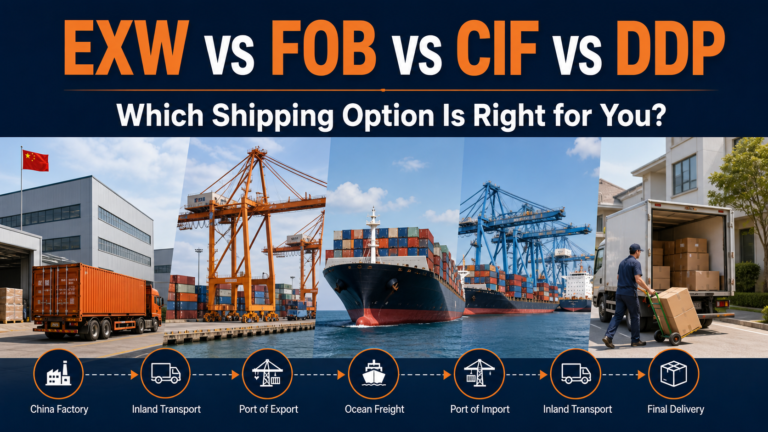
Requesting a clear Incoterm—such as EXW, FOB, CIF or DDP where available—helps identify which costs and responsibilities are included. Import rules and destination charges should also be confirmed with a qualified local customs or logistics professional.
6. Evaluate the Supplier’s Communication and Process
Good communication before an order is often an indicator of how problems will be handled later. Consider whether the supplier:
- Asks about the application before recommending a model
- Answers technical questions directly and consistently
- Clearly separates included and optional items
- Provides realistic lead times instead of automatic promises
- Explains payment, inspection and change-control procedures
- Keeps drawings, quotations and confirmed requirements organized
- Is willing to say when a product may not be suitable
The purpose of these questions is not to create unnecessary paperwork. It is to reduce ambiguity before production, packing and shipping make changes more expensive.
7. Use a Written Pre-Order Checklist
Before paying a deposit or approving production, confirm the following in writing:
- Final product model and specification
- Quantity, accessories and spare parts
- Approved drawings, colors or samples
- Total price, currency and payment milestones
- Incoterm, destination and delivery responsibilities
- Production schedule and inspection arrangement
- Packing, shipping marks and required documents
- Warranty coverage and issue-resolution process
If an important point is still uncertain, pause and clarify it. A short delay before order confirmation is usually easier to manage than a specification dispute after production.

Questions to Ask a Supplier Before Buying
You can send these questions to almost any product supplier:
- Which model do you recommend for my application, and why?
- What are the important limitations of this model?
- Which materials and components are included in this quotation?
- What is excluded and may create an additional cost?
- Can you provide recent evidence of the product and its quality checks?
- What must be prepared at the destination before delivery?
- Which spare parts or consumables should be ordered in advance?
- How are quality issues handled after shipment?
How Zhengzhou Vision Helps Buyers Make an Informed Choice
Zhengzhou Vision is a trade-company sourcing, customization and export solutions provider. Our role is to help overseas buyers clarify requirements, compare suitable configurations, coordinate supplier information and prepare practical export solutions.
Our objective is not to ask customers to purchase before they understand the product. We aim to explain the specifications, applicable conditions, costs and possible limitations clearly, so each customer can make a decision based on their own needs.
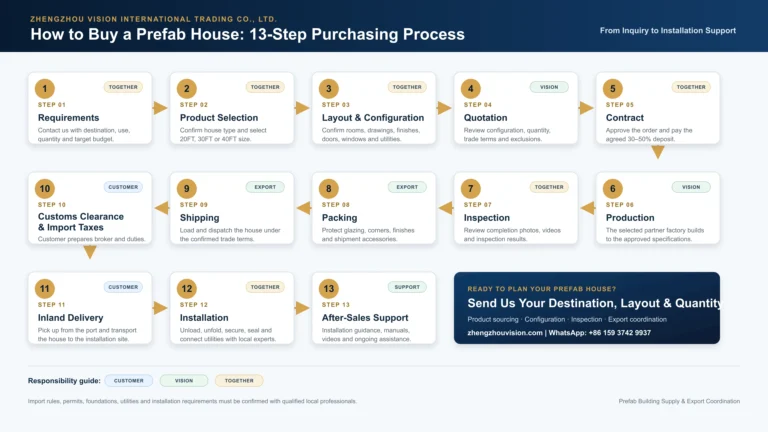
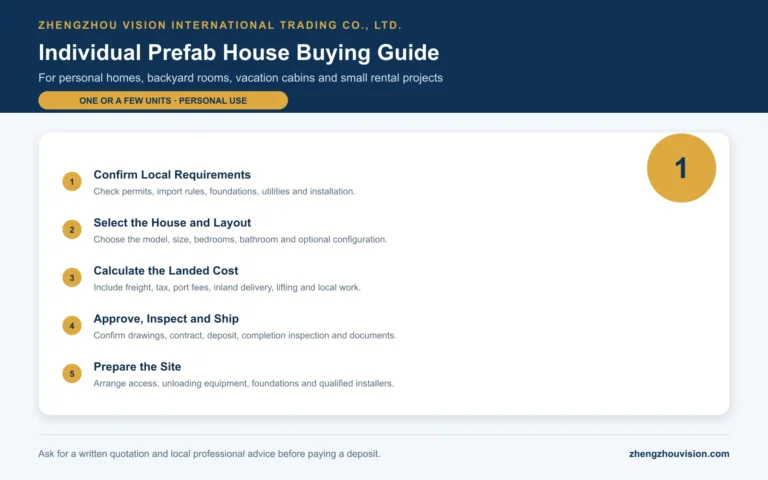
If you are currently planning a prefab building project, you can also read our complete prefab house buying guide or review the six-step importing and shipping guide. To discuss a specific sourcing request, contact our export solutions team with the product, quantity, destination, intended use and key requirements.
Frequently Asked Questions
Should I choose the lowest-priced supplier?
Not automatically. Compare the confirmed specification, included accessories, quality evidence, delivery terms and total landed cost. A lower price may be reasonable, but it should be clear what has changed or been excluded.
How can I verify product quality before shipment?
Use approved specifications, recent production evidence, samples, video inspection or an independent third-party inspection, depending on the value and risk of the order.
What information should I provide to receive an accurate quotation?
Provide the application, required capacity or size, quantity, destination, operating conditions, essential features and desired delivery time. Drawings or reference photos can help, but the final specification should be confirmed in writing.
What if I am not sure which product is suitable?
Describe the problem you need to solve rather than selecting a model immediately. A responsible sourcing partner should compare practical options, explain trade-offs and identify missing information before recommending a solution.